Zhuhai Zhengyuan Optoelectronic Technology Co., Ltd. +86-756-6831079 sales@luxfighter.com
FOLLOW US -
  • News

    LED Clearance Lights: What They Do, How They Differ from Position Lights, and What to Check Before You Buy

    2026-09-30T14:27:59.0000000Z

    Clearance Lights and Position Lights: One Word, Two Different Jobs

    In everyday Chinese, clearance lamps  and Position Light are used almost interchangeably, and most drivers never need to tell them apart. In engineering drawings, type-approval files and customs documentation, however, they are two distinct components — and confusing them is one of the most common causes of a wrong part being ordered.

    A position light (Front light / Rear light, "front position lamp" and "rear position lamp") — the lamp Chinese drivers commonly call Position Light — is a small white or red lamp fitted at the front or rear of a vehicle. In common speech it is the "little lamp". Its task is to show that the vehicle exists and roughly how wide it is.

    A clearance light is the lamp that standards call the end-outline marker lamp. It is fitted at the outermost edge of the vehicle — the top corners of a cab, the extreme edges of the front and rear faces, and along the roofline and sides of long or wide vehicles. Because it sits at the extremities, it communicates two things at once: the vehicle's width and its height. That is why a truck's silhouette is drawn for other drivers by a row of small lamps running from the roofline down to the deck.

    The distinction has regulatory weight. In markets applying ECE rules, end-outline marker lamps become a mandatory fitment once a vehicle exceeds 2.10 m in overall width — European trailer and commercial-vehicle OEM catalogues list the front end-outline marker lamp under ECE R48 §6.13 and ECE R7, required above that width. In China, GB 7258 requires front position, rear position and end-outline marker lamps to switch on and off together, which is why they behave as a single group in traffic.

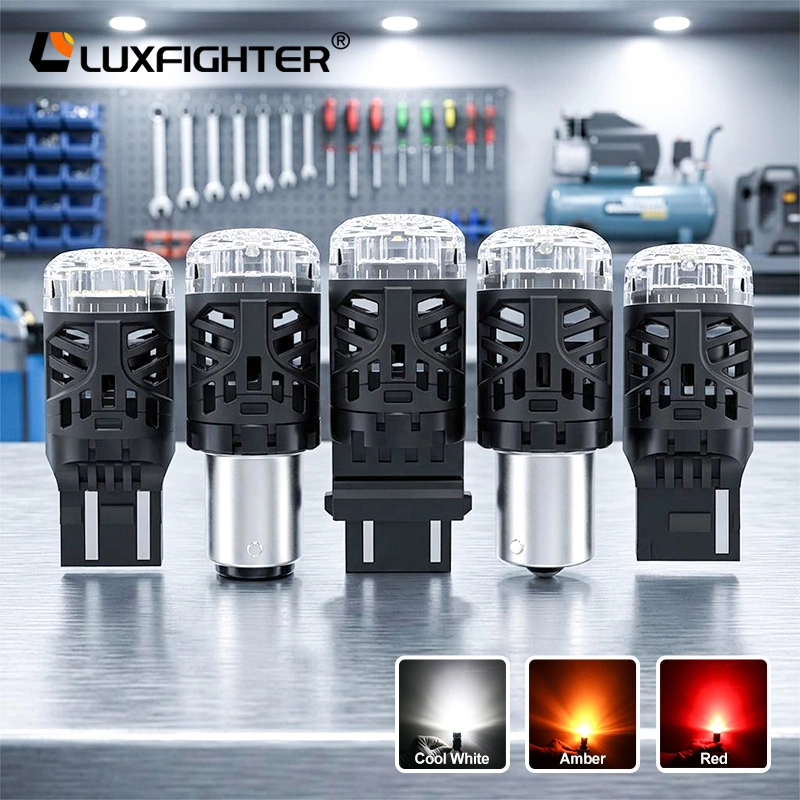
    T10 Manufacturer & Supplier - Zhengyuan Optoelectronic

    What Clearance Lights Actually Do: Three Functions

    The question "what is the function of an LED clearance light?" has three answers, and all three are about being seen rather than about seeing.

    1. Standing or parked at the roadside at night. When a vehicle pulls over after dark, a lit clearance light marks its presence and its approximate width, so that vehicles meeting or overtaking it can judge whether there is room to pass. Without it, a dark vehicle at the edge of an unlit road is effectively invisible until headlights pick it out.

    2. Dusk, dawn and well-lit urban roads. On a street with adequate street lighting, the headlamps are not needed to see the road, but the vehicle still has to be visible. Clearance lights fill that gap: they allow a driver to run on position lighting alone where local rules permit, without dazzling oncoming traffic.

    3. Rain, snow, fog and other low-visibility conditions. In poor weather the contrast between a vehicle and its background collapses. Clearance lights re-establish the outline — a function shared with the rear position lamps, which is why the two are switched together.

    On heavy vehicles the function scales up. A tractor-trailer is roughly 2.5 m wide and over 4 m tall; a line of clearance lights along the cab roof, the front corners and the trailer sides gives drivers behind and beside it a continuous reference for its true footprint. For fleet operators, that outline is the cheapest available substitute for visibility.

    China Tail/Brake/Reversing Lights Factory - Zhengyuan Optoelectronic

    Clearance Light, Position Light, Brake Light, Head Lamp: How They Differ

    The four lamps are often discussed together, but they answer four different questions. Clearance lights and position lights are the "being seen" group; head lamps and brake lights belong to other tasks.

    Aspect Clearance light (end-outline marker) Position light (front / rear)
    Mounting position Outermost edge of the vehicle — cab roof corners, front and rear extremes, vehicle sides Front face (white) or rear face (red) of the vehicle
    What it signals Presence and overall width and height Presence and approximate width
    Typical colour White to the front, red to the rear, amber permitted in some applications White at the front, red at the rear
    When it is used Night, dusk, and low-visibility weather; often continuously during operation Night, dusk, and low-visibility weather
    Typical fitment Mandatory above 2.10 m overall width under ECE markets; standard on trucks, trailers, buses and large vans Standard on virtually all road vehicles

    Two neighbouring lamps should not be mixed up with them. A head lamp illuminates the road ahead — its quality is measured by beam distance and light distribution, and its purpose is driver vision, not vehicle visibility. A brake light is a warning lamp that activates when the brake pedal is pressed, telling the driver behind that this vehicle is decelerating. Clearance lights tell others where you are; a brake light tells them what you are doing. One consequence is worth noting for anyone upgrading lamps: because front position, rear position and end-outline marker lamps are wired to be switched together, a single change of lamp type on a vehicle affects the whole group. Buyers should treat them as one system rather than as individual bulbs

    LED or Halogen: What Changes on a Clearance Light.

    Most clearance lights still in service use incandescent bulbs. Swapping them for LED is a small change with an outsized effect on visibility, service life and current draw.

    Aspect Halogen / incandescent clearance light LED clearance light
    Brightness and recognition distance Limited output; the lamp dissolves into the background at distance Higher luminous efficacy; the outline stays legible much further away
    Service life Hundreds to around a thousand hours Thousands of hours — in practice, maintenance-free for the life of the vehicle
    Power draw and heat Higher current draw, noticeable heat build-up, gradual output loss as the lamp ages Lower current draw and less heat, easing load on the lighting circuit
    Response time Filament must heat before it lights Instant illumination with no warm-up
    Colour Effectively fixed White, warm white, amber and red available to match the application
    Mechanical durability Filament is vulnerable to vibration and shock No filament to break — better suited to rough road conditions

    The energy argument matters more than it first appears. Position and clearance lamps are often lit for the entire duration of a working shift, so a lower current draw accumulates into a real reduction in alternator load and fuel consumption across a fleet — and less heat inside the lamp housing means the lens and reflector age more slowly.

    LED Clearance Lights

    China Tail/Brake/Reversing Lights Factory - Zhengyuan Optoelectronic


    Five Checks Before Ordering LED Clearance Lights in Volume

    For distributors, fleet buyers and e-commerce sellers, the buying decision is about consistency across a shipment rather than about performance on a single sample.

    1. Confirm the light source actually delivers the stated output. Ask for luminous flux and light-distribution data rather than a wattage figure alone; brightness claims without photometric data cannot be verified on arrival.

    2. Check how the lamp manages heat. Clearance lights run for long periods. An aluminium housing with a passive, fan-free cooling design removes a moving part and a failure point, and keeps output stable instead of fading as the lamp warms up.

    3. Insist on a meaningful ingress-protection rating. These lamps are exposed to rain, spray, road salt and pressure washing. An IP65 rating or better is the baseline for anything used in all weather.

    4. Match the voltage range to the vehicle parc you serve. A wide-input design such as DC 9–32 V covers 12 V passenger vehicles and 24 V commercial vehicles in one SKU, which simplifies inventory considerably for distributors selling across both segments.

    5. Verify compliance documentation and the supplier behind it. Ask for the type-approval or test documentation relevant to your target market, and buy from a source manufacturer with in-house R&D, ageing-test capability and traceable production records. Compliance papers are what allow a shipment to clear customs and what protects the buyer if a product is questioned after sale.

    Fitting and Using Clearance Lights: Notes from the Workshop

    Confirm the socket before you order. Clearance and position lamps are built on a range of bases, and a visually similar lamp is not necessarily the same fitment. Check the vehicle's manual or the existing bulb, particularly when a single order has to cover a mixed fleet.

    Replace the group, not the individual lamp. Because position, clearance and side marker lamps are switched together, and because LED and incandescent lamps differ in colour temperature, replacing one lamp at a time produces a visibly mismatched vehicle. Replacing the set keeps the outline uniform — and is easier for a fleet to schedule.

    Expect no electrical surprises on modern vehicles. Direct-replacement LED lamps are designed to work with the existing wiring, and no modification is normally required. Fitting a set of identical lamps to a vehicle remains the most predictable way to avoid resistance-related warning messages.

    Why Buyers Choose Luxfighter

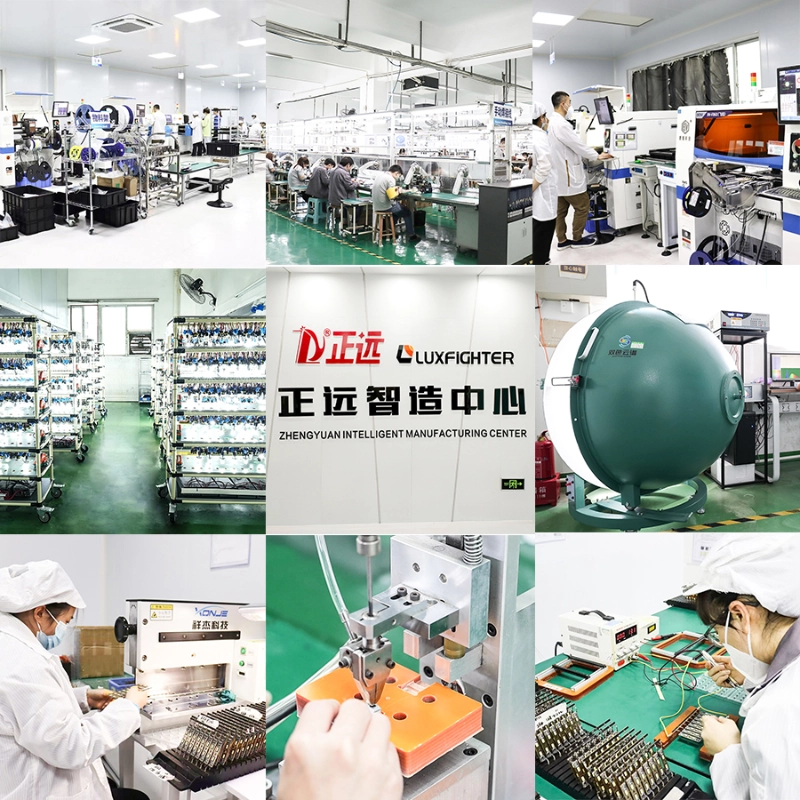
    Luxfighter is the overseas brand of Zhuhai Zhengyuan Optoelectronic Technology Co., Ltd., a manufacturer founded in 2007 and focused since then on the development and production of high-power automotive LED lighting. The product range covers LED head lamps, fog lamps, motorcycle lights, underwater and boat lighting, signal and marker lights and grille lights, and is exported to markets worldwide.

    For buyers, three things matter more than the catalogue length. The company manufactures at source, so specification, packaging and branding can be controlled at the point of production rather than assembled from third-party stock. Products pass through ageing and reliability verification before shipment, so what arrives in month twelve matches what arrived in month one. And OEM/ODM programmes are available across appearance, colour temperature and packaging, which lets a distributor build its own brand on a compliant base.

    If you are sourcing marker, position or signal lighting for retail, wholesale or fleet supply, bring the specification you need — socket type, voltage range, colour, ingress protection and the compliance documents your market requires — and ask for samples for real-vehicle testing.

    Fog Lights by Series - China Factory - Zhengyuan Optoelectronic


    LED Clearance Lights


    Frequently Asked Questions

    What is the difference between a clearance light and a position light? A position light is fitted at the front or rear of the vehicle and signals presence and approximate width. A clearance light — the end-outline marker lamp — is fitted at the outermost edge, including the roofline and sides of large vehicles, so it signals both width and height.

    Are clearance lights the same as daytime running lights? No. Daytime running lights operate during the day to make a vehicle conspicuous in daylight. Clearance lights operate at night, at dusk and in low-visibility weather, and they are part of the outline-marking group rather than a daytime conspicuity feature.

    Do I have to switch clearance lights on manually? The lamp group is normally controlled together with the position lights. Requirements differ by market, so check local rules — in China, GB 7258 treats front position, rear position and end-outline marker lamps as a group that switches together.

    Can I replace a halogen clearance light with an LED one directly? In most cases yes — direct-replacement LED lamps are designed for the original socket and wiring. Confirm the base type first, and replace the whole set so that colour and brightness stay uniform across the vehicle.

    Why do LED clearance lights cost more than incandescent ones? Because they last far longer and draw less current. Once the cost of repeated bulb replacement and the downtime it causes are counted, the higher purchase price is normally recovered well within the service life of the vehicle.

    Which vehicles use clearance lights? Trucks, trailers, buses, coaches and larger vans use them as standard, and in ECE markets they become mandatory above 2.10 m in overall width. Passenger cars and light vehicles typically use position and side marker lamps, which serve a closely related function.

    Luxifighter

    The Short Answer

    Clearance lights exist so that other drivers can read a vehicle's outline before they can read anything else about it. They mark presence, width and height at night and in poor visibility, and on commercial vehicles they are the difference between being seen at a distance and being discovered at close range.

    Upgrading them to LED is one of the least expensive safety changes a fleet or owner can make, and one of the easiest to specify correctly: match the socket, match the voltage range, choose a lamp with a real ingress-protection rating, and buy the set rather than the single unit.

    To review the full range of LED marker, position and signal lighting — or to discuss OEM/ODM supply for your market — visit the Luxfighter official store.

    Our History - Zhuhai Zhengyuan Optoelectronic Technology Co., Ltd.


    Related News
    We use cookies to offer you a better browsing experience, analyze site traffic and personalize content. By using this site, you agree to our use of cookies. Privacy Policy
    Reject Accept